

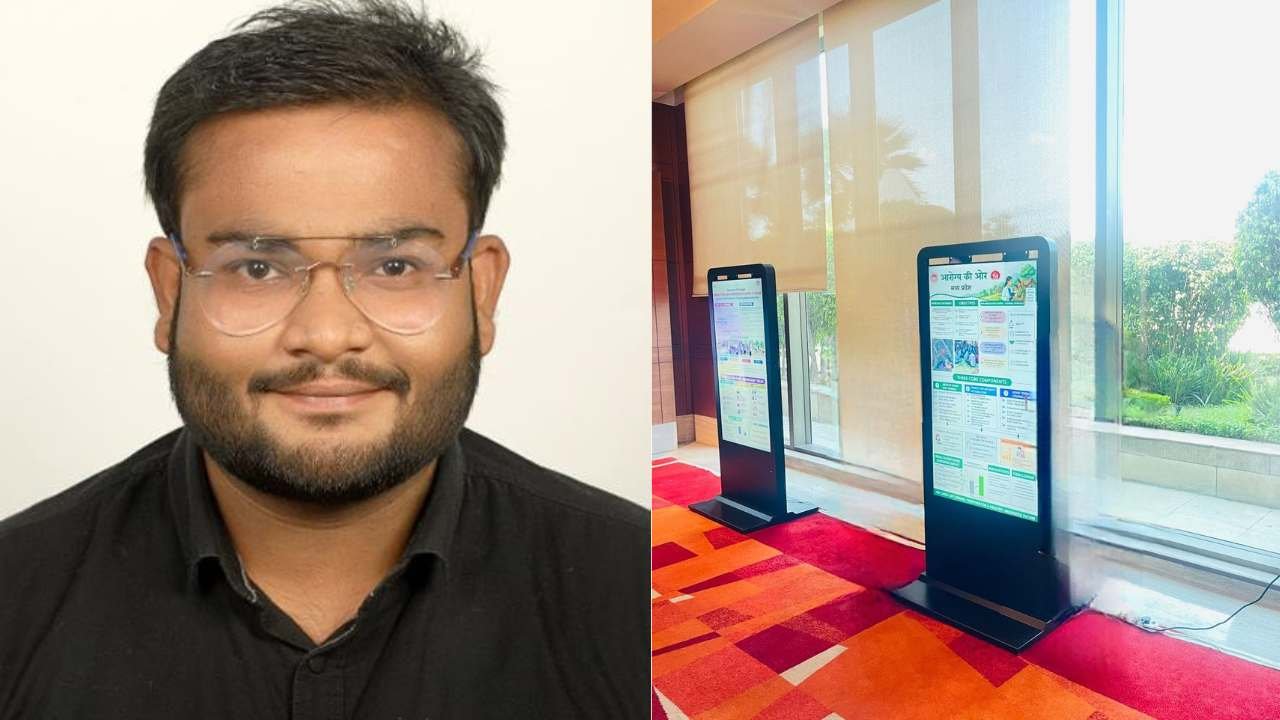
Betul, Madhya Pradesh: A remarkable public health initiative from Madhya Pradesh’s Betul district has earned national attention after being showcased at the 10th National Summit on Innovation and Inclusivity – Best Practices Shaping India’s Health Future held in Chandigarh. The initiative, titled “Arogya Ki Aur” (Towards Health), was presented as a Poster Presentation and highlighted as an innovative model for strengthening immunization coverage among tribal and hard-to-reach populations.
The recognition marks an important milestone for Betul district and reflects the growing impact of community-focused healthcare interventions in improving public health outcomes in underserved regions.
Tribal-Focused Immunization Model Gains National Spotlight
Developed and implemented under the leadership of Dr. Pranjal Upadhyay, District Immunization Officer, Betul, the “Arogya Ki Aur” initiative was designed to address long-standing challenges in routine immunization services across tribal communities.
Betul district is home to a significant tribal population and includes many remote villages where healthcare access is often affected by geographical barriers, seasonal isolation, transportation challenges, and social factors. These conditions can create gaps in vaccination coverage, particularly among children and pregnant women.
Recognizing these challenges, the district administration and health department introduced a targeted strategy aimed at ensuring that every eligible beneficiary receives essential vaccines. The initiative combines grassroots outreach, community participation, beneficiary tracking, and stronger coordination among healthcare stakeholders.
National Summit Celebrates Transformative Health Practices
The National Summit on Innovation and Inclusivity is regarded as one of India’s leading public health platforms that recognizes successful health interventions from across the country. The event brings together policymakers, government officials, healthcare experts, researchers, development organizations, and program managers to exchange ideas and share proven solutions.
Selection for presentation at the summit reflects the effectiveness and potential scalability of a project. “Arogya Ki Aur” was recognized as a promising example of how local innovations can help address complex healthcare challenges and contribute to better health outcomes.
The platform also provides opportunities for states and districts to learn from one another and replicate successful models in areas facing similar challenges.
Community Participation at the Heart of Success
One of the strongest pillars of the “Arogya Ki Aur” initiative has been its emphasis on community engagement. The programme actively involves frontline health workers such as ASHAs, ANMs, and Anganwadi Workers, along with village leaders and local influencers.
These stakeholders play a critical role in identifying children and pregnant women who have missed vaccinations, spreading awareness about immunization, and encouraging families to access healthcare services.
The initiative also focuses on culturally sensitive communication strategies that help address misconceptions about vaccines and build confidence among tribal communities. By creating trust and fostering community ownership, the programme has strengthened acceptance of immunization services in several underserved areas.
Strengthening Healthcare Access in Remote Regions
Health experts have long emphasized that achieving universal immunization requires special attention to vulnerable populations living in remote locations. Through regular monitoring, supportive supervision, and targeted outreach activities, “Arogya Ki Aur” has worked towards reducing immunization gaps and ensuring equitable healthcare access.
The initiative demonstrates how locally tailored solutions can produce meaningful improvements in service delivery when backed by strong planning and dedicated field implementation.
A Proud Achievement for Madhya Pradesh
The national recognition of “Arogya Ki Aur” is being viewed as a proud moment for Betul district and the state of Madhya Pradesh. It highlights the commitment of healthcare workers, district officials, and community stakeholders who continue to work tirelessly to improve public health indicators.
As India moves towards strengthening universal immunization coverage and inclusive healthcare systems, initiatives such as “Arogya Ki Aur” offer valuable lessons in innovation, community partnership, and grassroots leadership.
The success of the programme reinforces the belief that sustainable healthcare transformation is possible when local challenges are addressed through locally driven solutions. With its growing recognition, the Betul model could inspire similar interventions in tribal and underserved regions across the country, helping ensure that no child or mother is left behind in India’s healthcare journey.