featured article
Why leaves change colour in autumn
Latest articles

Add a custom archive category description here.
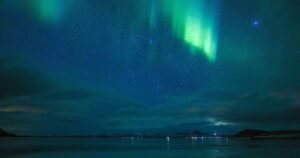
Charged particles, not sunlight, make the aurora. Here is how Earth's magnetic field shapes the glow, its colours and how far from the poles it reaches.
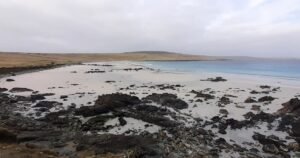
The Moon and the Sun pull on the whole ocean, creating two bulges of water. Here is how that becomes two tides a day, and why no two coasts look the same.
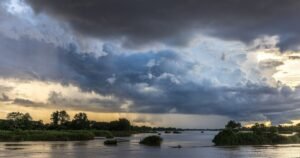
One process, Rayleigh scattering, explains both a blue midday sky and a red sunset. The difference is how much atmosphere the sunlight crosses.
A light-year is a distance, not a span of time. It is how far light travels in a year, and it doubles as a measure of how far into the past we look.

Your phone never knows where it is. It measures how long radio signals take to arrive from four satellites and solves the geometry from there.

Magnitude describes the size of an earthquake at its source, while intensity describes the shaking at a particular place. The two are often confused.