

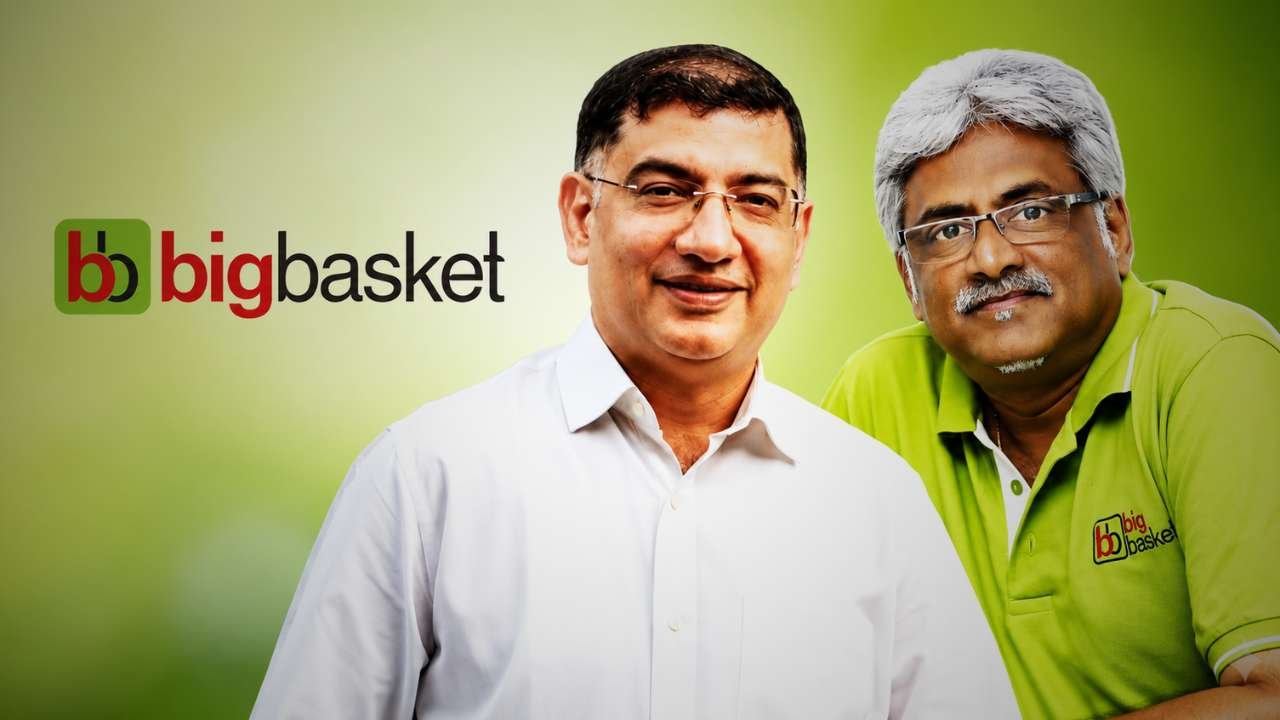
BigBasket, one of India’s leading online grocery platforms, is entering a new phase as it looks to strengthen its position in the fast-growing quick commerce market. The Tata Group-backed company has appointed former Amazon executive Amit Nanda as its new Chief Executive Officer (CEO), replacing co-founder Hari Menon, who is stepping down after leading the company for nearly 15 years.
Hari Menon’s exit comes as he approaches the Tata Group’s retirement age limit of 65. While he is stepping down from the CEO role, he will continue to remain on the company’s board and support the new leadership team along with co-founder Vipul Parekh.
The leadership change comes at a time when BigBasket is facing growing competition from rivals such as Blinkit, Zepto, and Swiggy Instamart, while also dealing with rising losses linked to its quick commerce expansion.
Amit Nanda Gets the Task of Improving Performance
Amit Nanda brings more than 20 years of experience across e-commerce, consumer goods, and banking. He holds an engineering degree from Delhi College of Engineering and an MBA from IIM Ahmedabad. Before joining BigBasket, he spent over 11 years at Amazon and most recently served as the Director of Selling Partner Services at Amazon India.
His biggest challenge will be reducing the company’s losses while helping BigBasket grow faster in the quick commerce space. The company has been trying to catch up with competitors that gained an early advantage in the 10-minute delivery segment.
BigBasket’s quick commerce business now accounts for nearly 80% of its total orders, showing how important this segment has become for the company’s future growth.
Financial Losses Continue to Increase
The company’s shift toward quick commerce has come with a heavy financial cost. In FY25, BigBasket reported a net loss of ₹2,006.8 crore, a 42% increase from ₹1,415.2 crore in the previous year.
At the same time, operating revenue fell slightly by 2% to ₹9,866.7 crore.
The company’s consumer business, operated through Innovative Retail Concepts, saw revenue decline by 3% to ₹7,673 crore, while losses increased by 47% to ₹1,851 crore. Its business-to-business arm, Supermarket Grocery Supplies, reported a 7% drop in turnover to ₹2,227.4 crore, although losses narrowed to ₹102.3 crore.
Expenses continued to rise during the year. Total spending increased by 3% to ₹11,893.6 crore. Marketing costs jumped 51% to ₹496.8 crore as the company spent heavily to attract customers. Employee benefit expenses stood at ₹971.2 crore, while transportation costs reached ₹838 crore.
Another challenge has been the decline in sales from BigBasket’s private-label brands such as Fresho and BB Royal. These brands once contributed around 40% of total sales but accounted for only about 30% in FY25.
The financial performance has reportedly raised concerns within the Tata Group. During a recent board meeting, senior Tata executives questioned the company’s growing losses and demanded a clearer path toward profitability.
As a result, BigBasket has been asked to explore external funding options instead of depending entirely on support from Tata Group companies. Reports suggest that the Tata Group is working with global investment banks to raise fresh capital for its digital businesses, with a major share expected to go to BigBasket.
Quick Commerce Expansion and IPO Plans
Despite the financial pressure, BigBasket is continuing to invest heavily in quick commerce. The company currently operates hundreds of dark stores across India and plans to expand its network to between 1,000 and 1,200 stores by the end of FY26.
The company is also focusing on a multi-category quick commerce model. Apart from groceries, customers will be able to receive products such as electronics, medicines, and fashion items within minutes. BigBasket plans to use outlets from Tata-owned brands like Croma and Tata 1mg as part of this strategy.
A major advantage for BigBasket is its higher average order value (AOV), which is above ₹850. This is significantly higher than many of its competitors and could help improve profitability over time.
The company is also entering the 10-minute food delivery segment through its new service called “Meal Express.” Initially launched in Bengaluru, the service offers food from Tata-owned brands such as Starbucks and Qmin. BigBasket plans to expand the service further over the coming months.
At the same time, the company continues to support Tata Neu’s quick commerce service, Neu Flash, helping strengthen the Tata Group’s digital ecosystem.
Looking ahead, BigBasket is preparing for a potential IPO within the next 12 to 24 months. The company is reportedly targeting a valuation of around $5 billion and aims to raise $1 billion through the public offering.
However, before going public, BigBasket will need to improve its financial performance, increase revenue, and move closer to profitability. With Amit Nanda now leading the company, the coming years will be crucial in determining whether BigBasket can regain momentum and strengthen its position in India’s highly competitive quick commerce market.