

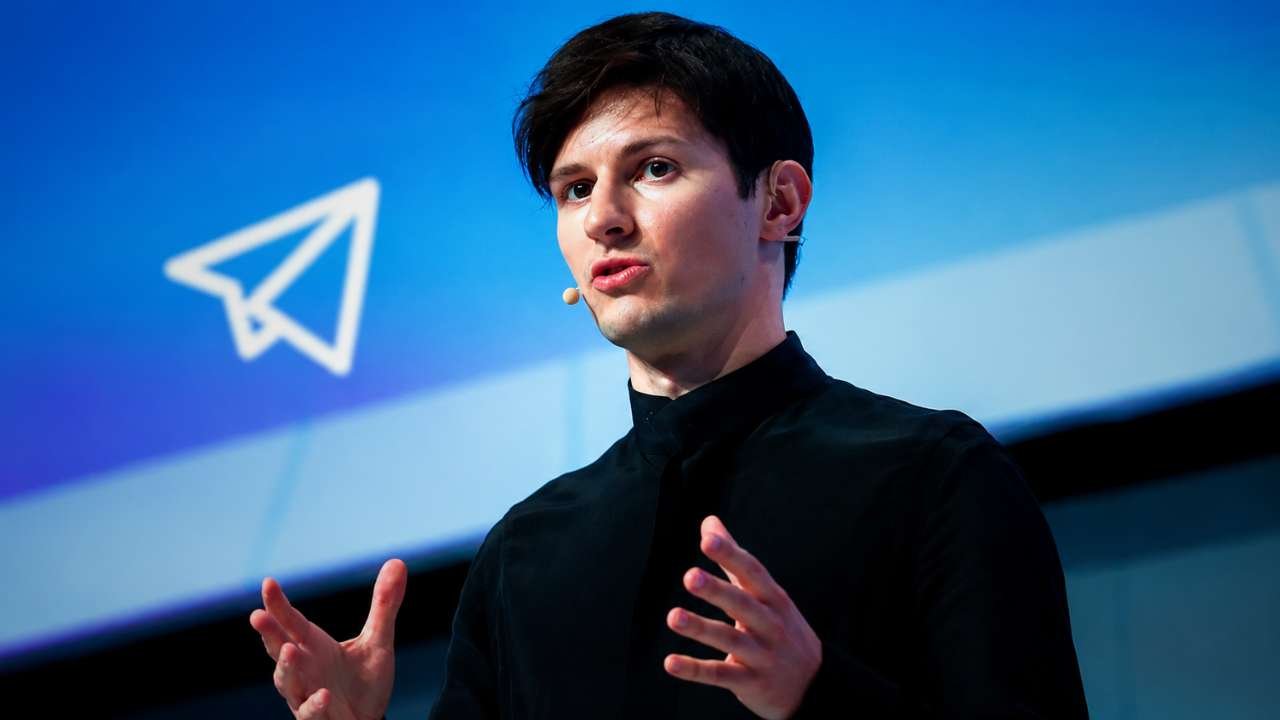
The controversy around Telegram in India has become much bigger after Telegram founder Pavel Durov accused a Reliance-linked network of disrupting the platform’s services beyond India. The allegation comes at a time when the Indian government has temporarily blocked Telegram to prevent the spread of fake NEET-UG exam paper leaks.
What started as an attempt to protect one of India’s biggest entrance exams has now turned into a debate involving internet infrastructure, student welfare, digital rights, and corporate responsibility.
NEET-UG Re-Exam Leads to Temporary Telegram Ban
The issue began after the NEET-UG 2026 medical entrance exam was cancelled due to allegations of a question paper leak. More than 22 lakh students were affected, forcing authorities to schedule a re-examination on June 21, 2026.
During the investigation, officials found that several Telegram channels were taking advantage of worried students and parents. These channels claimed they had access to leaked question papers and charged anywhere from a few thousand rupees to several lakhs for fake exam papers and false promises.
One of the biggest concerns was a trick used by scammers through Telegram’s message-editing feature. Fraudsters would post a random message weeks before the exam. After the exam ended and the actual question paper became public, they would edit that old message and attach the real paper. Since Telegram shows the original posting time, it looked like the paper had been shared before the exam. Screenshots of these edited messages quickly spread online and created panic among students.
To stop the misuse, the Ministry of Electronics and Information Technology (MeitY), acting on recommendations from the National Testing Agency (NTA) and the Department of Higher Education, ordered a temporary block on Telegram across India from June 16 to June 22.
The government also directed Telegram to disable editing of previously posted messages in India until June 30. Officials had earlier tried to remove individual channels linked to exam fraud, but new groups kept appearing, making it difficult to control the problem through channel-level action alone.
Authorities also introduced strict security measures for the June 21 re-exam. Question paper setters and translators were reportedly kept under close supervision without internet access, while the Indian Air Force helped transport confidential exam papers across the country.
Pavel Durov Criticises the Ban and Raises New Allegations
Telegram founder Pavel Durov strongly opposed the government’s decision. He said the temporary ban punished millions of honest users, including students, teachers, and small businesses that rely on Telegram every day.
According to Durov, Telegram had already removed hundreds of suspicious channels and was working to make edited messages more transparent. He argued that blocking the entire platform would not stop organised cheating because fraudsters could simply move to other messaging apps.
Telegram has also challenged the ban in the Delhi High Court, seeking legal relief against the government’s order.
The issue took another turn when Durov alleged that a Reliance-linked network had interfered with Telegram’s internet traffic. He claimed the disruption affected users not only in India but also in several other regions, including Europe, Asia, and the Middle East.
The allegation is linked to the Border Gateway Protocol (BGP), a system that helps route internet traffic around the world. Reports suggested that a network identified as AS18101 incorrectly announced ownership of internet routes connected to Telegram. As a result, some Telegram traffic was redirected and dropped.
Durov described the incident as intentional sabotage and suggested it was connected to competition within India’s digital market.
Jio Denies Involvement as Debate Over Digital Rights Grows
Soon after Durov’s comments, telecom experts highlighted an important detail. The network involved in the routing controversy was reportedly linked to Reliance Communications (RCom), not Reliance Jio.
Reliance Communications, led by Anil Ambani, is a separate company that is currently going through insolvency proceedings. Reliance Jio, on the other hand, is part of Mukesh Ambani-led Reliance Industries.
Reliance Jio denied any role in the incident and said it follows international internet routing standards. Several industry experts also believe the disruption may have been caused by a technical mistake rather than a deliberate attempt to target Telegram.
At the same time, the temporary Telegram ban has sparked criticism from students, political leaders, and digital rights groups. Many students depend on Telegram for study materials, notes, test preparation groups, and educational content. The restriction affected access to these resources just days before the important re-examination.
Digital rights activists have also questioned whether blocking an entire platform used by millions is the right way to deal with a small number of fraudulent channels. The incident has once again raised concerns about online privacy, encrypted messaging services, and the balance between security and digital freedom.
As legal challenges continue and investigations move forward, the Telegram controversy has expanded far beyond the NEET-UG exam issue. It has now become a major discussion about technology, governance, education, and internet freedom in India.