

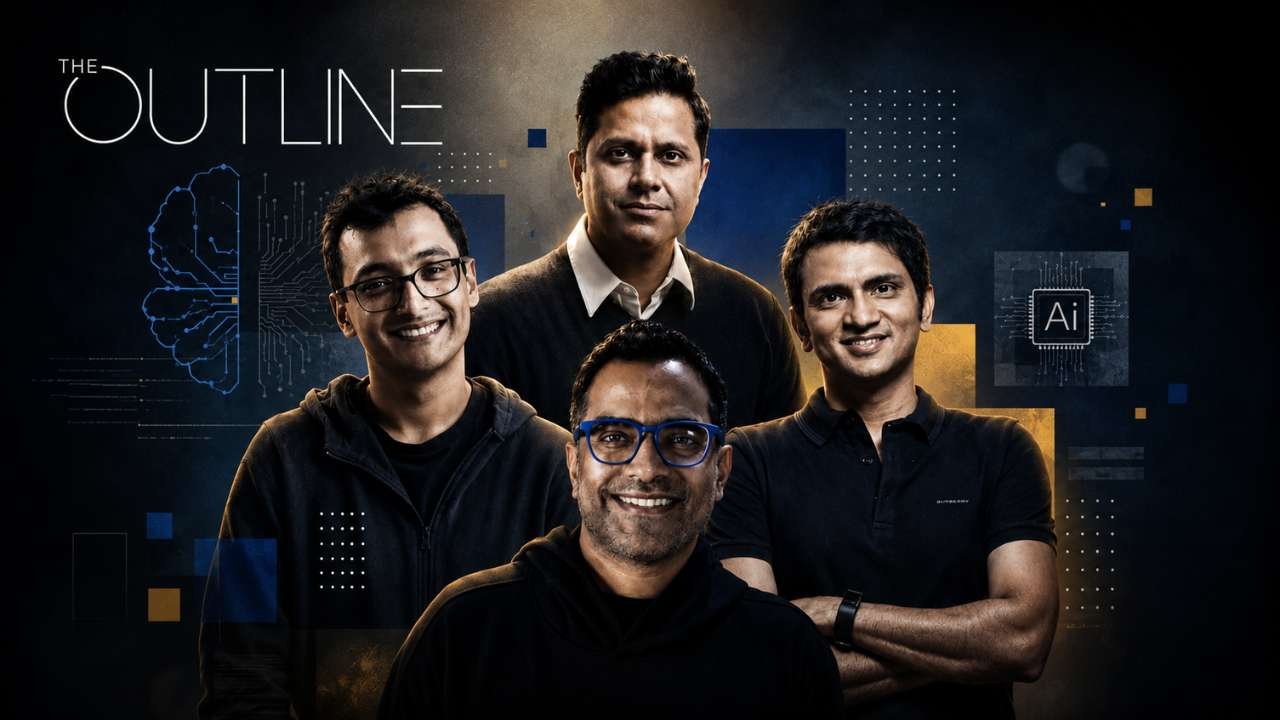
India’s startup ecosystem is entering a new phase as many founders behind some of the country’s biggest internet companies are now focusing on artificial intelligence (AI). After building successful businesses in e-commerce, fitness, and delivery services, these entrepreneurs are starting AI-first companies that aim to change how businesses and households use technology.
The growing interest in AI comes at a time when companies across industries are investing more in automation and smart software. Businesses want AI tools that can improve customer service, increase productivity, and reduce manual work. As funding for AI startups continues to rise, experienced founders are choosing AI as the foundation of their next ventures, showing that the technology could drive the next wave of innovation in India.
Experienced Startup Founders Launch AI-First Companies
One of the biggest moves comes from Mukesh Bansal, the co-founder of Myntra and Cult.fit. He has launched Nurix AI, a startup that builds AI agents for businesses. These AI agents are designed to help with customer support, sales, and daily business operations.
To expand its services, Nurix AI recently acquired conversational AI startup Verloop. The acquisition is expected to help the company build a stronger AI platform for businesses looking to automate routine tasks and improve customer experience.
Another well-known entrepreneur, Kabeer Biswas, the former founder of Dunzo, has also entered the AI space with a new startup called M. The company has already raised ₹102 crore from investors Peak XV and Blume Ventures.
M plans to automate household work, starting with kitchen-related tasks. The startup believes that in the future, AI assistants will not only answer questions or follow voice commands but will also help people with physical everyday work at home.
These new ventures show that experienced entrepreneurs now see AI as more than just a feature. Instead, they believe AI will become the main technology behind the next generation of successful startups.
Another entrepreneur joining this trend is Bhavin Turakhia, who has launched Neo, an AI-first workplace platform backed by a $30 million investment. Although not many details about the platform have been shared yet, the launch shows that more startup founders are building products that use AI from the beginning.
AI Is Changing Hiring and Business Strategies
The rise of AI startups is happening at the same time as India’s IT industry is changing.
Many leading IT companies are reporting higher revenues without increasing their employee numbers. Experts describe this trend as “jobless growth”, where companies are growing by using automation, AI, and better productivity instead of hiring large numbers of people.
Companies are expanding their global capability centres and investing more in AI-based services. Because of this, hiring has become more selective, with employers looking for people who have specialised AI and digital skills.
According to Gartner Senior Vice President and analyst DD Mishra, IT companies are now focusing more on delivering complete business solutions rather than hiring more employees for individual projects. This shows how businesses are using AI to improve efficiency and long-term growth.
This shift is also creating demand for AI platforms that can automate customer service, internal operations, and business processes—the same areas where startups like Nurix AI are building their products.
Strong Funding Shows Growing Confidence in AI
Investors are also showing strong interest in AI-focused startups.
Late-stage startup funding in India has increased sharply during the first half of the year, with the average investment size reaching about $86 million. A large share of this money is going into AI infrastructure, enterprise software, lending technology, and energy startups, showing that investors believe AI will play a major role in the future economy.
Large technology companies are preparing for this shift as well. Tata Consultancy Services (TCS) plans to build a team of up to 8,900 AI deployment engineers while also looking for AI companies to acquire. The goal is to help clients adopt AI more effectively.
The startup ecosystem has also seen other important developments. Flipkart recently announced a $50 million ESOP buyback programme for eligible employees, while Swiggy reduced its foreign shareholding below 50%, making it a majority Indian-owned company.
Overall, these developments show that India’s startup industry is entering a new AI-driven era. The first generation of unicorn founders built companies around the internet and smartphones. Now, many of the same entrepreneurs are building AI-first businesses. With experienced founders, rising investor interest, and growing demand from companies, AI startups are expected to play a major role in shaping the future of India’s technology sector.