

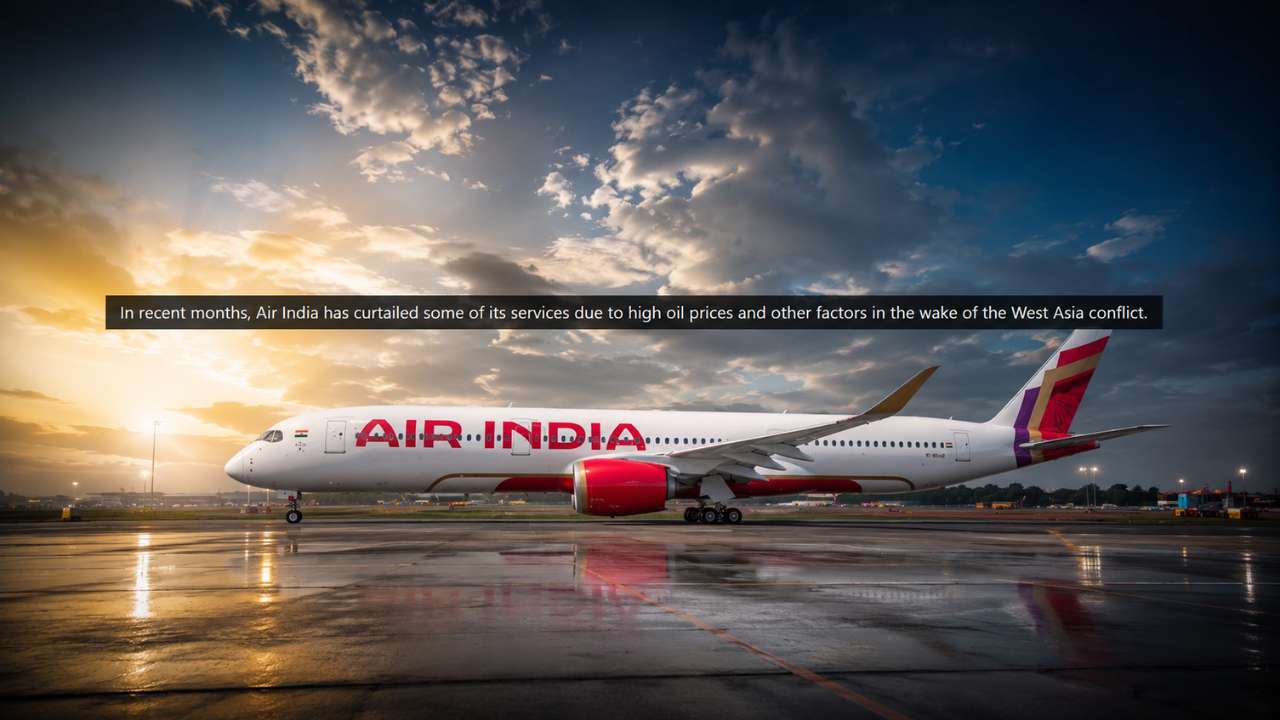
Air India is moving ahead with its major transformation plans despite facing one of the toughest periods in its history. The Tata Group-owned airline has announced that it will receive 50 to 60 new aircraft over the next 18 months, showing that its long-term growth plans are still on track.
The airline is dealing with several challenges, including heavy financial losses, aircraft shortages, and the impact of the tragic AI171 crash in 2025. Even so, Air India says it remains committed to improving its fleet, customer experience, engineering facilities, and overall operations through its Vihaan.AI transformation programme.
The new aircraft deliveries are expected to help the airline expand its network, improve services, and bring back capacity that was affected by aircraft upgrades and operational issues.
New Aircraft and Fleet Upgrades to Support Growth
Adding new aircraft is one of the biggest parts of Air India’s long-term growth strategy. The upcoming deliveries are part of the airline’s record aircraft order placed with Boeing and Airbus. Over the next 18 months, these planes will help Air India increase flights, improve connectivity, and serve more domestic and international destinations.
At the same time, Air India is continuing its $400 million fleet upgrade programme, which covers 67 older aircraft.
The airline has already made good progress in upgrading its Airbus A320neo aircraft with better cabins and improved passenger facilities.
Work is also continuing on the Boeing 787 Dreamliner fleet. These aircraft are getting new three-class cabins, modern interiors, and upgraded systems to improve the travel experience. The refurbishment of the Boeing 777 fleet has been delayed because of global supply chain problems, but the airline plans to complete those upgrades over the next few years.
Air India is also investing in a large Maintenance, Repair and Overhaul (MRO) facility in Bengaluru. Spread across 35 acres, the centre will support aircraft maintenance, create around 1,200 jobs, and include a training institute to prepare future aviation engineers.
These investments show that Air India is focused on building a stronger airline for the future instead of only solving short-term problems.
Financial Challenges and Recovery Efforts
While Air India is investing in growth, it is also facing serious financial pressure. Reports say the airline posted a net loss of more than ₹22,000 crore in FY26, taking its total losses since the Tata Group took over in January 2022 to over ₹58,000 crore.
Several major events have affected the airline’s finances.
The biggest setback was the crash of Air India Flight AI171 in June 2025. The Boeing 787-8 Dreamliner crashed shortly after taking off from Ahmedabad while flying to London Gatwick. The accident claimed the lives of 241 passengers and crew members, along with 19 people on the ground. Only one passenger survived.
The investigation found that both engine fuel control switches moved to the cutoff position just seconds after take-off, causing both engines to lose power. After the accident, the Directorate General of Civil Aviation (DGCA) ordered inspections of the fuel control switch locking systems on all Boeing 787 aircraft operating in India.
The crash also reduced Air India’s widebody aircraft capacity by around 15% because several aircraft had to undergo inspections and operational checks.
At the same time, Pakistan closed its airspace to Indian airlines after the Pahalgam terror attack in April 2025. This forced Air India to take longer routes to Europe and North America, increasing fuel use and flight times. Higher Aviation Turbine Fuel (ATF) prices caused by tensions in West Asia added more pressure on the airline’s costs.
To reduce expenses, Air India introduced several cost-saving measures. These included cutting capacity, freezing bonuses, reducing salaries for senior executives, and placing some non-technical employees on temporary furlough.
Leadership Changes and the Road Ahead
Air India is also going through important leadership and organisational changes.
The merger between Air India and Vistara, completed in November 2024, created one of India’s largest full-service airlines with a fleet of around 300 aircraft. Tata Group also completed the merger of Air India Express and AIX Connect to strengthen its low-cost airline business.
The airline successfully combined employee policies, salary structures, and work culture while moving millions of loyalty programme members into the newly launched Maharaja Club.
Air India has also improved its loyalty programme by lowering the number of points needed for reward flights, making it easier to earn elite status, speeding up point credits, and offering more benefits to frequent flyers.
Meanwhile, CEO Campbell Wilson has confirmed that he will step down later this year. Air India has started looking for a new leader, with Chief Commercial Officer Nipun Aggarwal being seen as one of the leading internal candidates.
Despite facing financial and operational challenges, Air India says its long-term vision remains unchanged. The arrival of 50 to 60 new aircraft, along with fleet upgrades, improved maintenance facilities, better customer services, and network expansion, is expected to help the airline build a stronger future.
With these investments and reforms, Air India is aiming to become a more modern, competitive, and reliable global airline in the years ahead.