

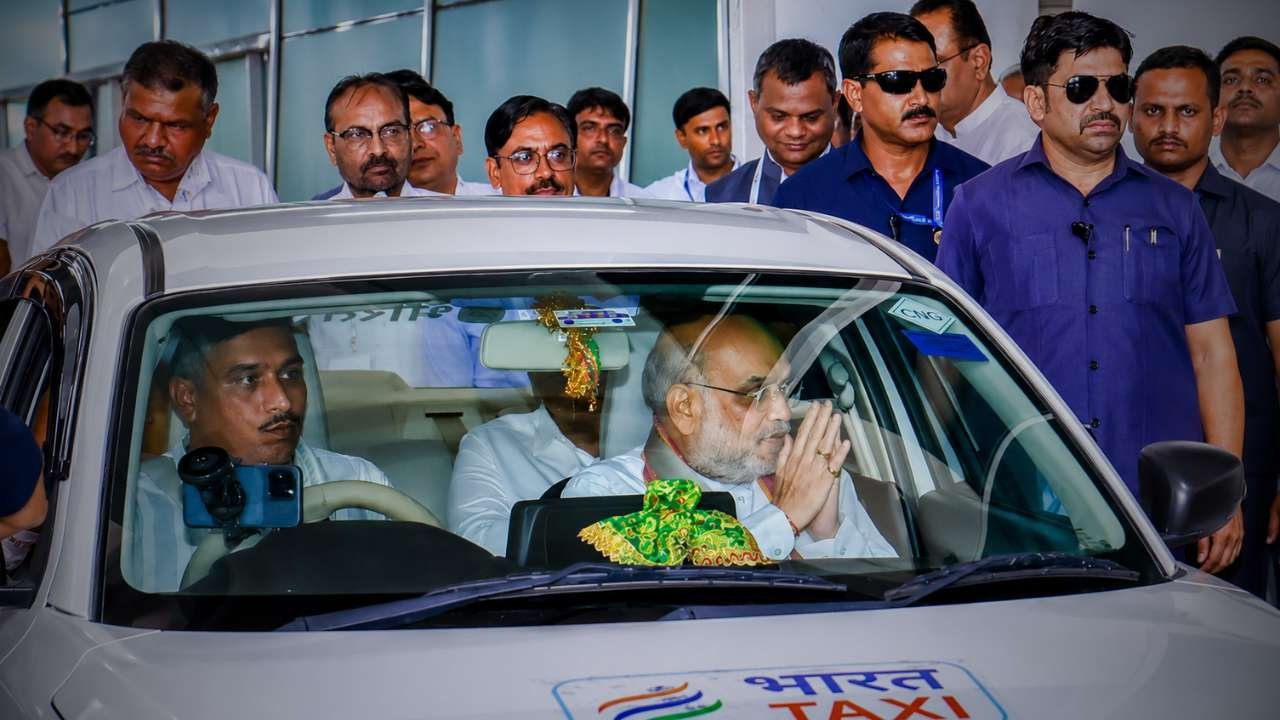
India’s ride-hailing market is seeing a big change with the fast growth of Bharat Taxi, the country’s first cooperative-owned taxi platform. Launched on February 5, 2026, by Union Home and Cooperation Minister Amit Shah, Bharat Taxi aims to give drivers more earnings, better benefits, and a stronger role in the business.
Unlike private cab services, Bharat Taxi follows a cooperative model where drivers are not just workers but also owners of the platform. This new approach is expected to change the way ride-hailing works in India. The government has announced that Bharat Taxi will expand to more than 500 cities and towns over the next two years, with a special focus on Tier-2 and Tier-3 cities.
Driver-First Model Gives Better Income and Benefits
One of the biggest differences between Bharat Taxi and other ride-hailing apps is its zero-commission model. Drivers, who are called “Sarathis,” keep the full amount they earn from every ride. Instead of paying a percentage of each fare, they only pay a small fixed daily fee to use the platform.
Drivers also become members of the cooperative by buying shares that start from just ₹100. As members, they can vote in the cooperative and even get representation on the board, giving them a say in important decisions.
Bharat Taxi has also promised to share 80% of its yearly profits with drivers after its first three years of expansion. The profit will be shared based on the total distance each driver has covered.
The platform also focuses on driver welfare. Every registered Sarathi gets ₹5 lakh personal accident insurance and ₹5 lakh family health insurance. Drivers are connected to the e-Shram portal, making it easier to receive government benefits and social security schemes. They can also apply for low-interest loans through cooperative banks by using their vehicles as security.
Affordable Rides and Better Service for Customers
Bharat Taxi is also trying to make travel cheaper and more transparent for passengers. The platform does not allow surge pricing, which means customers pay the same fare even during busy hours or bad weather.
The starting fare is ₹30 for the first four kilometres, ₹23 per kilometre from four to twelve kilometres, and ₹18 per kilometre after that. Since drivers do not pay commissions, the company says rides can cost up to 30% less than many private ride-hailing apps.
Passengers can choose from bike taxis, auto-rickshaws, economy cabs, premium sedans, and SUVs. The app also offers outstation trips, rental services for up to 12 hours, scheduled bookings, and metro ticket booking.
To improve safety for women, Bharat Taxi has introduced the “Sarathi Didi” feature. This service matches female passengers travelling alone with female drivers. More than 150 women have already joined the platform as drivers.
The platform is supported by India’s Digital Public Infrastructure. It uses services like DigiLocker for quick driver verification and also connects with government digital platforms to make registration and operations easier.
Fast Growth and Big Expansion Plans
Bharat Taxi has already started operations in Delhi-NCR and several cities in Gujarat, including Ahmedabad, Surat, Rajkot, Gandhinagar, Gurugram, Noida, and Faridabad.
The platform has already onboarded more than seven lakh driver-members and served over 37 lakh customers. With an initial investment of just ₹5 crore, Bharat Taxi has helped drivers earn more than ₹35 crore in its early months.
The company has also partnered with airports, metro rail services, railways, cooperative institutions, banks, and local traffic police. These partnerships will help set up dedicated Bharat Taxi pickup points at airports and major transport hubs, making travel easier for passengers.
The entry of Bharat Taxi has increased competition in India’s ride-hailing market. According to Amit Shah, some private ride-hailing companies have reduced fares for a short period to stop Bharat Taxi from growing quickly. However, the government believes that Bharat Taxi’s driver-owned model, fair pricing, and focus on driver welfare will help it succeed in the long run.
With plans to reach more than 500 cities in the next two years, Bharat Taxi is aiming to create a fairer ride-hailing system where drivers earn more, passengers pay less, and cooperative ownership becomes a new model for India’s transport sector.