

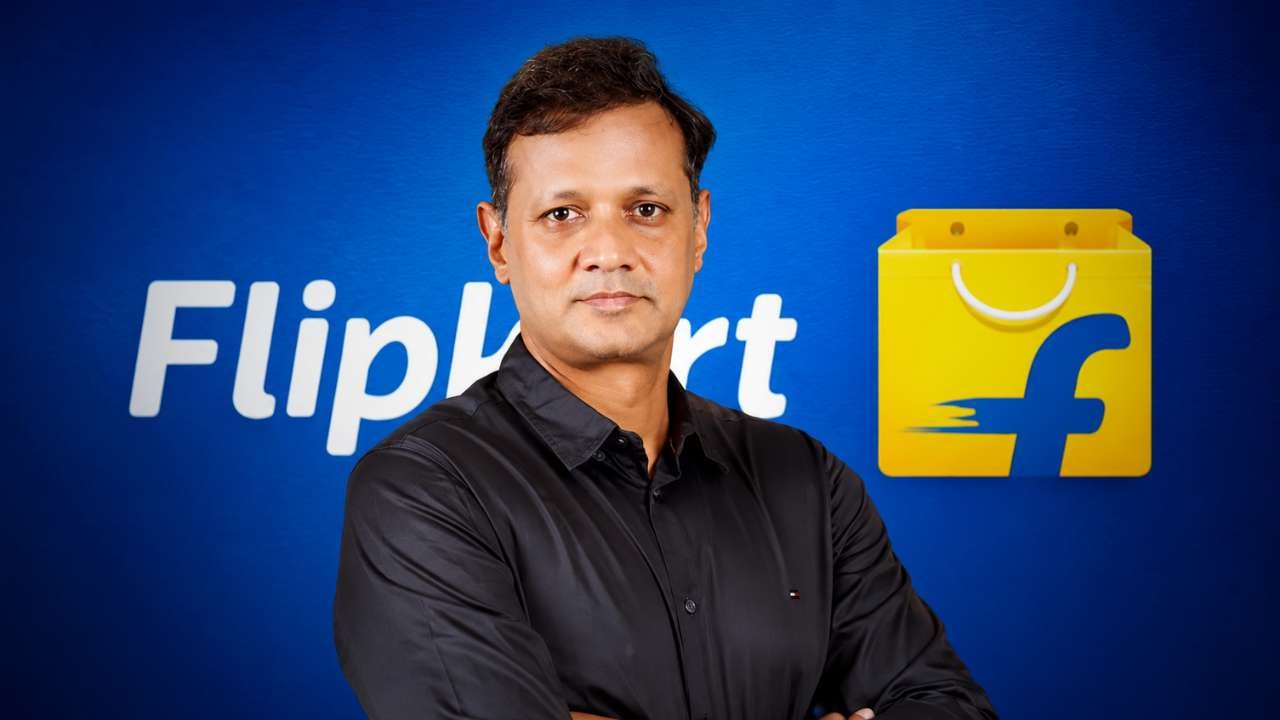
Flipkart is going through a major transformation as it prepares for its next stage of growth. The Walmart-owned e-commerce company is seeing several senior leaders leave, while also bringing in new executives to strengthen its technology and supply chain operations. At the same time, Flipkart is investing heavily in artificial intelligence (AI), expanding its quick commerce business, and focusing on profitability before its expected IPO.
The latest leadership addition is Vinay Vaidya, who has joined Flipkart as Senior Vice President for Supply Chain Technology. His appointment comes as the company works to improve its delivery network and strengthen its technology teams.
Flipkart Sees Leadership Changes as It Builds a Stronger Team
Over the past few months, Flipkart has witnessed the exit of several senior executives. Ankit Jain, who was Senior Vice President and headed the grocery and large supply chain business, is leaving to join Swiggy Instamart. Prajakta Kanaglekar, Vice President of HR Technology, Anurag Singhvi, Vice President and Head of Analytics, and Ganesh Ramaswamy, Vice President at Flipkart and Chief Product and Technology Officer at Cleartrip, have also stepped down.
The finance department is also going through a leadership change. Group Chief Financial Officer Sriram Venkataraman has resigned after serving the company since 2015. He will continue to support Flipkart during the transition period, while Ravi Iyer has been given the responsibility of leading the finance function for now.
To strengthen its technology team, Flipkart has appointed Vinay Vaidya as Senior Vice President for Supply Chain Technology. Vaidya has nearly 20 years of experience, including 18 years at Amazon and a previous role as Chief Technology Officer at Tata Digital. He will lead technology for fulfilment services, marketplace operations, and seller tools to improve delivery speed and efficiency.
His appointment is also part of Flipkart’s new “OneTech Initiative”, which brings all technology teams together under one structure to improve collaboration and speed up innovation.
Flipkart Bets Big on AI and Faster Deliveries
Artificial intelligence is becoming a key part of Flipkart’s future plans. Senior Vice President Hemant Badri and Chief Technology Officer Balaji Thiagarajan are leading the company’s AI strategy.
Flipkart is building its own Large Language Model (LLM) specially designed for Indian e-commerce. The company wants this AI model to improve product search, customer support, seller services, and shopping in regional languages.
By developing its own AI model, Flipkart hopes to reduce its dependence on third-party AI providers, lower long-term costs, and keep its shopping data secure. The company also wants to offer better voice search and regional language experiences for India’s growing online customer base.
CEO Kalyan Krishnamurthy has said that Flipkart will continue to use a human-in-the-loop approach. This means AI will help employees complete routine work faster, but people will still make important decisions. The company is also improving its data security, compliance systems, and fraud detection as it prepares for future growth.
At the same time, Flipkart is rapidly expanding Flipkart Minutes, its quick commerce service. The company is focusing on Tier-2 and Tier-3 cities such as Rohtak, Muzaffarpur, and Asansol, where demand for fast deliveries is increasing.
Flipkart is planning a major expansion of its dark store network. It currently operates around 750 to 850 fulfilment centres and aims to increase this to around 1,000 by March or April 2026. The company plans to further expand the network to nearly 1,500 locations by the end of 2026 as it competes with Blinkit, Zepto, and Swiggy Instamart.
Profit Focus and IPO Plans Continue
Along with expanding its business, Flipkart is also trying to improve its financial performance. Reports suggest that around 400 to 500 employees, or about 3% to 4% of its workforce, recently left the company after a stricter annual performance review process. Overall, around 5% to 7% of employees across different business divisions are expected to be affected.
Despite these cost-cutting measures, Flipkart has improved its financial performance. The company’s losses narrowed to ₹5,189 crore in FY25, although total expenses increased by more than 17% to ₹88,121.4 crore due to higher inventory costs. Flipkart’s gross merchandise value (GMV) also reached around $30 billion in 2025, doubling from $15 billion in 2020.
Flipkart has also been preparing for its much-awaited initial public offering (IPO). The company shifted its headquarters back to India in 2025 and had earlier separated from PhonePe as part of its listing preparations. The expected IPO could value Flipkart at around $35 billion.
However, the listing may take more time than expected. Walmart has reportedly advised Flipkart to first achieve EBITDA breakeven before moving ahead with the IPO. Because of this, industry experts believe the company is more likely to launch its public offering in late 2026 or early 2027.
With new leadership appointments, stronger investments in AI, a faster-growing quick commerce business, and a greater focus on profitability, Flipkart is preparing itself for the next phase of growth while getting ready for its future stock market debut.