

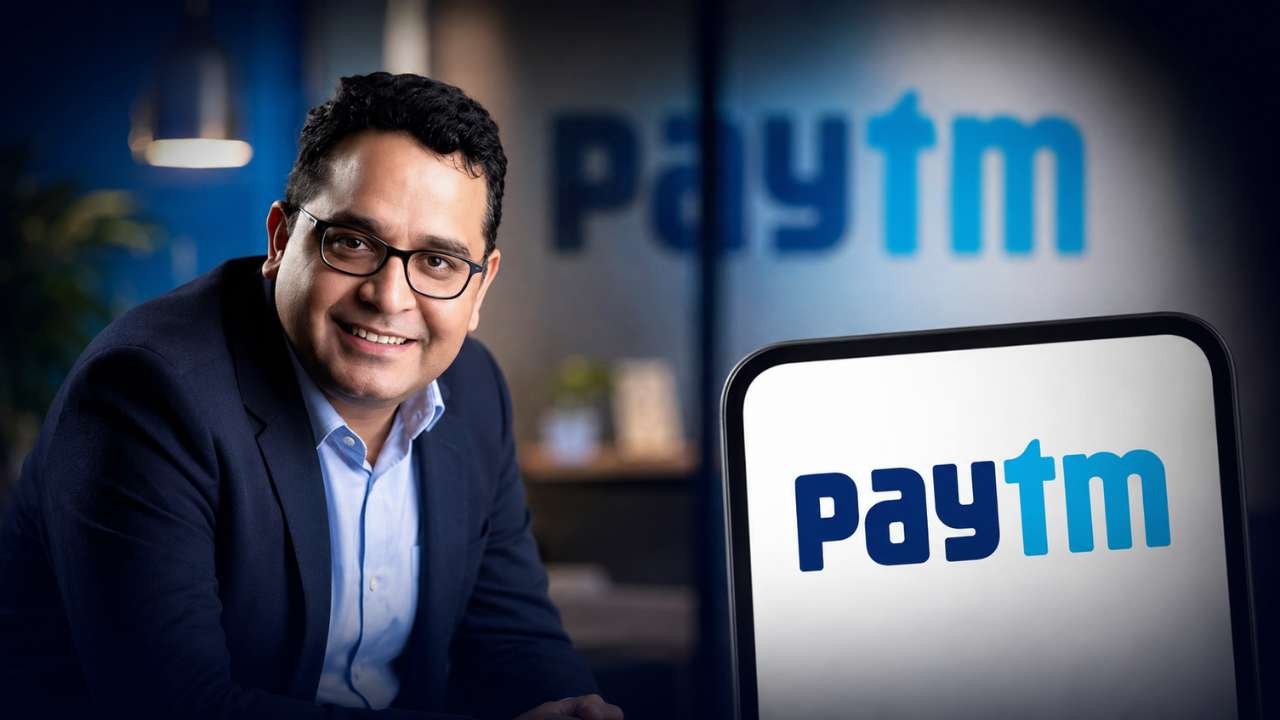
Paytm has decided not to issue bonus shares, even after reporting one of its best quarterly performances in recent years. Instead of rewarding shareholders with bonus shares, the fintech company has chosen to invest up to ₹100 crore in its wealth management business, Paytm Money. The decision comes after Paytm reported strong revenue and profit growth in the first quarter of FY2027 while continuing to expand its payments and financial services business.
The company’s latest move shows that it wants to focus on long-term business growth instead of giving investors a short-term boost through bonus shares. Along with this investment, Paytm is also seeking shareholder approval to use a large part of its unused IPO funds to strengthen its payments business and bring in more customers.
Paytm Posts Strong Q1 FY27 Results but Cancels Bonus Share Plan
Paytm reported a strong financial performance in the April-June quarter of FY2027. Revenue from operations rose to ₹2,448 crore, up 28% compared to the same quarter last year and 8% higher than the previous quarter. The company’s consolidated net profit increased by around 79% year-on-year to about ₹220 crore, showing steady improvement after recording its first full-year profit in FY26.
The company also posted its highest-ever quarterly EBITDA of ₹203 crore. Its EBITDA margin improved to 8%, compared to 4% a year ago, showing better cost control and stronger business performance.
Even after these strong results, Paytm’s board decided not to go ahead with the bonus share proposal that was announced earlier. The company said its main goal is to continue growing the business and improving profits instead of creating a short-term rise in the share price through bonus shares. After the announcement, Paytm’s share price slipped slightly.
The board also approved changes to its employee stock option (ESOP) scheme. More than 15 lakh new stock options were granted, while nearly 5.9 lakh options lapsed. The company said the changes are meant to encourage employees to stay focused on long-term business growth.
Paytm Invests ₹100 Crore in Paytm Money and Focuses on Growth
One of the biggest decisions taken by the board was to invest up to ₹100 crore in Paytm Money through a rights issue. The money will be used to improve technology, meet regulatory capital requirements, and expand services such as stock broking, mutual funds, and wealth management.
Paytm Money has been growing steadily. Its turnover increased to ₹212.95 crore in FY26 from ₹172.93 crore in FY25. The fresh investment shows that Paytm sees strong growth opportunities in India’s digital investment market.
The company also plans to repurpose ₹1,686 crore of unused IPO funds. These funds were earlier set aside for acquisitions and new business opportunities. Now, Paytm wants the flexibility to use them for strengthening its payments business and attracting more customers. The company has also extended the deadline to use these funds until March 31, 2029.
Paytm continued to expand its business during the quarter. Merchant Gross Merchandise Value (GMV) grew 31% year-on-year to ₹7.1 lakh crore. Consumer UPI Gross Transaction Value (GTV) reached ₹5.9 lakh crore, growing much faster than the industry average. Monthly transacting users increased to 8 crore, while Paytm’s Soundbox and POS devices are now installed at 1.57 crore merchant locations across India.
The company also strengthened its leadership team by appointing Amitabh Kumar Singhal as a Non-Executive Non-Independent Director. Outside India, Paytm expanded its presence after its European unit received a Payment Institution License in Luxembourg. It also partnered with Indonesian fintech company Flip to provide payment technology and merchant solutions in Indonesia.
India’s Broking Industry Faces Tougher Rules
Paytm’s bigger focus on Paytm Money comes at a time when India’s online broking industry is going through major changes. Competition remains strong, with Groww leading in active users while Zerodha continues to earn much higher profits.
Over the past two years, SEBI has introduced several new rules to reduce risky trading in the futures and options (F&O) market. These changes include higher contract sizes, fewer weekly expiry contracts, stricter margin rules, and higher Securities Transaction Tax (STT) on derivative trades.
Since April 2026, traders have also been required to keep at least 50% of their margin in cash instead of using only pledged shares. These changes have increased trading costs and reduced speculative trading.
The new rules have had a clear impact on the industry. Retail options trading volumes have fallen sharply, and millions of traders have stopped using brokerage platforms. To manage higher costs and lower exchange rebates, many brokers have increased their charges for some trading services.
At the same time, Paytm continues to deal with regulatory matters. The company recently received a FEMA-related show cause notice over alleged violations linked to earlier acquisitions. However, it also received positive news after Paytm Payments Services got in-principle approval from the RBI to operate as an online payment aggregator, allowing the company to further grow its merchant payments business.
With strong quarterly earnings, steady growth in its payments business, and fresh investment in Paytm Money, the company is focusing on long-term expansion instead of short-term market gains. As India’s fintech and online broking sectors continue to evolve under tighter regulations, Paytm is aiming to strengthen its position for future growth.