

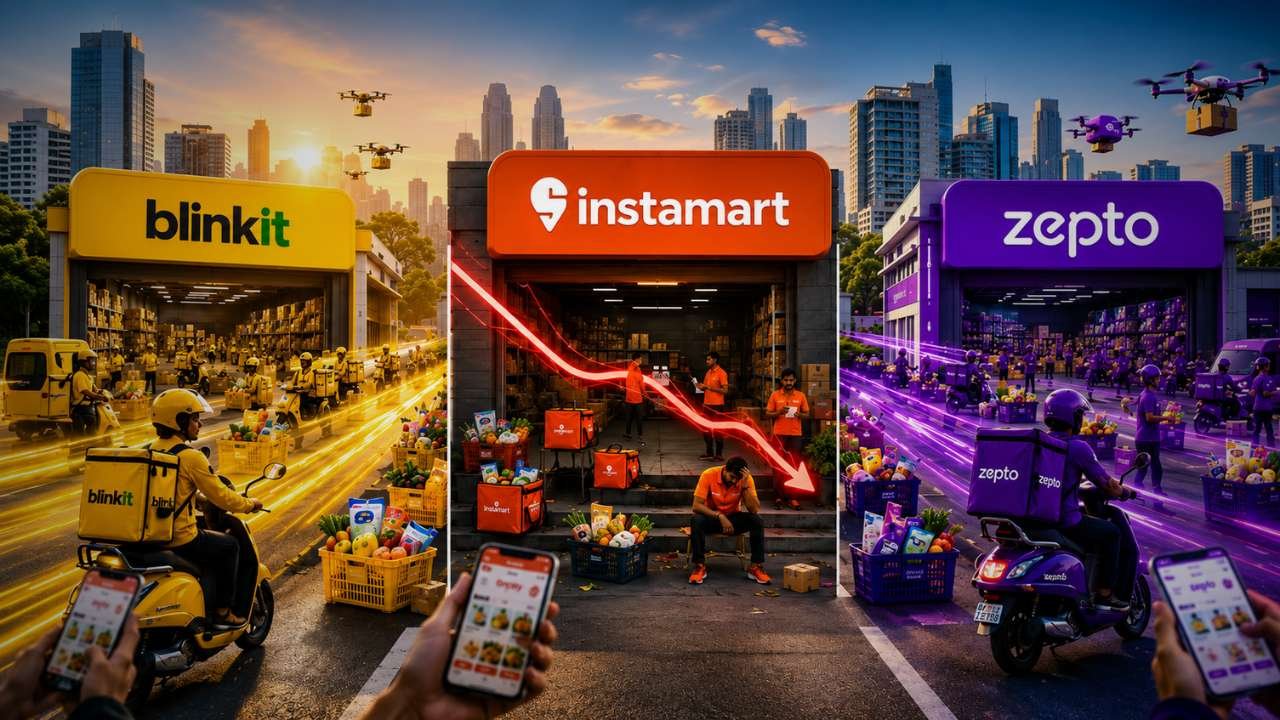
India’s quick commerce industry is growing faster than ever, but the competition among major players is becoming tougher. Blinkit, Zepto, and Swiggy Instamart are fighting for a bigger share of a market that is expected to reach nearly ₹2 lakh crore by FY28.
While Blinkit has managed to become profitable and strengthen its lead, Zepto is spending heavily to grow. At the same time, Swiggy Instamart is struggling to keep up with rivals and improve its financial performance.
Blinkit Leads the Market with Strong Growth
Blinkit, owned by Eternal Ltd. (formerly Zomato), has emerged as the biggest player in India’s quick commerce space. Industry estimates suggest that the company now controls around 45% to 48% of the market.
The company has built a network of nearly 2,000 dark stores across more than 100 cities, helping it serve customers quickly and handle a large number of orders every day. Its gross order value (GOV) has grown sharply over the past year, showing strong demand for instant deliveries.
One of Blinkit’s biggest achievements is reaching profitability. After years of focusing on expansion, the company has started reporting positive adjusted EBITDA, proving that quick commerce can become a profitable business.
Experts say Blinkit’s success comes from its inventory-led model, which allows it to earn better margins on products. The platform has also expanded beyond groceries and now sells electronics, personal care products, and household items. This has helped increase its average order value, which remains the highest among major quick commerce players.
Advertising has become another major source of income for Blinkit. As more brands compete for visibility on the platform, advertising revenue has grown rapidly and is adding to the company’s earnings.
Zepto Focuses on Growth Despite Heavy Losses
Zepto has become Blinkit’s strongest challenger by growing aggressively over the last few years. The company now holds around 31% to 35% of the market and delivers millions of orders every day through more than 1,100 dark stores.
However, rapid growth has come at a high cost. Zepto continues to report large losses as it spends heavily on expansion, customer acquisition, and product procurement.
To attract more users, the company has removed several extra charges and lowered the minimum order value required for free delivery. These moves have helped increase orders but have also put pressure on profitability.
Zepto is also working to strengthen its advertising business. Advertising revenue has grown significantly and is becoming an important source of income as the company prepares for a possible stock market listing.
Despite strong growth, investors are keeping an eye on governance and financial control issues that were highlighted in previous audit reports. These concerns are likely to remain important as Zepto moves closer to its planned IPO.
Instamart Tries to Regain Momentum
Swiggy Instamart is facing increasing pressure as competition in the quick commerce market intensifies. Industry reports suggest that its share among the top three players has fallen sharply over the last two years.
Swiggy has rejected these estimates and questioned the data used in the reports. Even so, analysts agree that Instamart has found it difficult to match the pace of expansion seen at Blinkit and Zepto.
The business continues to generate significant losses and remains one of the biggest challenges for Swiggy. To reduce costs, the company has slowed the expansion of its dark store network and is focusing more on improving profitability.
A key part of this strategy is the expansion of its private-label brand, Noice. Swiggy believes selling its own products across categories such as dairy, beverages, and ready-to-cook foods can help improve margins compared to selling products from other brands.
At the same time, some analysts remain concerned about the future of the business. Several brokerage firms have warned that continued losses could put pressure on Swiggy’s cash reserves if profitability does not improve soon.
The competition is also becoming tougher with new entrants entering the market. Companies such as Flipkart Minutes, Amazon Now, BigBasket, and JioMart are expanding their quick commerce operations and challenging the existing leaders.
As the industry enters a new phase, the focus is shifting from growth at any cost to building profitable businesses. Blinkit currently appears to be in the strongest position, Zepto is continuing its aggressive expansion, and Instamart is trying to improve margins while protecting its market share. The next few years will decide which company comes out on top in India’s fast-growing quick commerce market.