
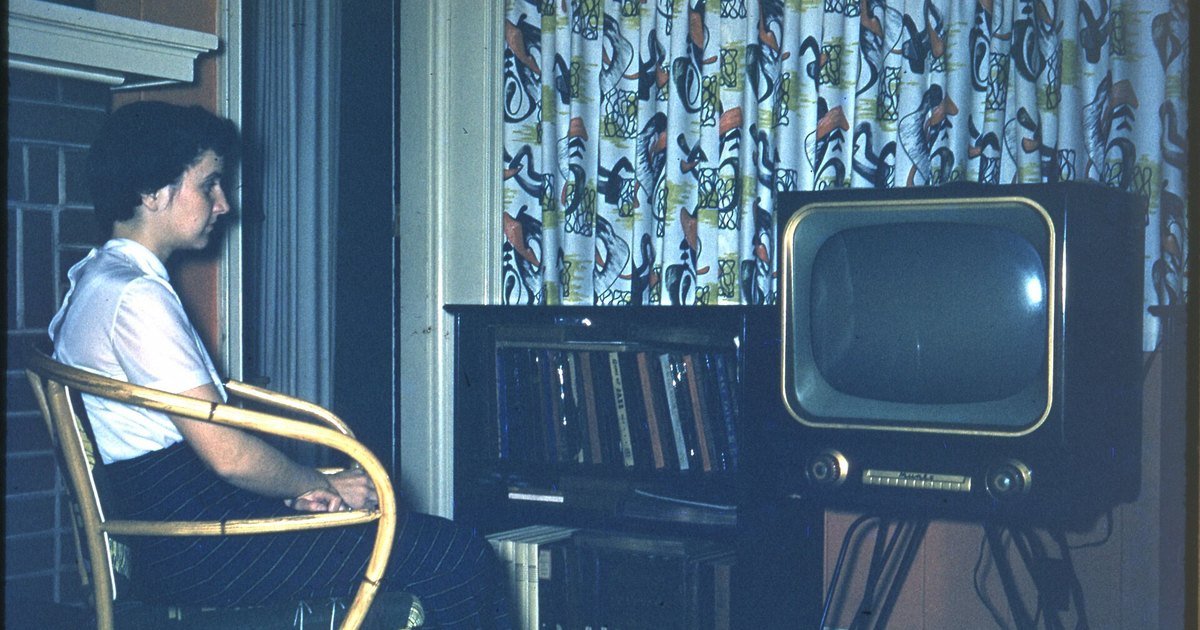
Streaming did not just change when people watch television. It changed who they watch it with. Broadcast television depended on a fixed schedule: a programme aired at a set time, and anyone who wanted to discuss it had to be in front of a screen at that moment. On-demand catalogues removed the schedule, and the shared evening that came with it became something each household assembles for itself.
From appointment viewing to the shared queue
Under a broadcast model, synchrony was external. The network decided the time, and the audience arranged its evening around it. A streaming library inverts that arrangement. Watching becomes a decision, and the household has to negotiate it: what to start, when to continue, and whether to wait for the person who fell asleep.
The practical result is a shift in the unit of viewing. A programme used to be a public event that happened to be watched at home. It is now a private agreement between two or three people, who may be several episodes ahead of everyone else. Conversation follows the difference: it is less about what happened last night, because there is no last night, and more about recommendations and warnings about where a series goes.
What co-viewing means in practice
Co-viewing is the term the measurement industry uses for more than one person watching the same screen at the same time. It is a simple idea with awkward consequences. A single stream from a household may represent one viewer or a whole family, and advertising, licensing and commissioning decisions all rest on knowing which. Panel-based ratings, which ask households to log viewing, and device-level data, which counts streams, each capture part of the picture and miss part of it.
Measurement bodies exist precisely to reconcile these signals. Nielsen describes co-viewing as a distinct behaviour worth tracking in its own right, while Barb, the body that measures United Kingdom television viewing, explains how panel data and device data are combined into a total viewing figure. Neither approach can see inside a room. Both infer.
The living room, rearranged
The physical setting changed too. Many households watch on more than one screen at a time, with a phone or tablet used alongside the television. Subtitles became a default rather than a preference, partly because dialogue is mixed for cinemas and partly because people watch while doing something else. A room that was built around one screen now has several, and attention is divided across them.
Why this shapes what gets made
Once viewing is measured per stream and per completion, the incentives change. A series that holds attention across many evenings is valuable in a way that a single broadcast hit was not, because it keeps a subscription active and produces repeated engagement. This is one reason long-form series and returning formats dominate commissioning.
Release strategy is now a deliberate lever. Dropping a full season at once suits binge viewing and pushes the conversation into a short, intense window. Releasing episodes weekly rebuilds the element that streaming removed: a scheduled moment when the audience is in the same place in the story at the same time. The weekly drop is not a technical limitation. It is a scheduling decision borrowed back from broadcast.
The norms that replaced the schedule
Shared schedules produce shared manners, and streaming is generating its own. Spoiler etiquette is the clearest example. When everyone watched at the same time, a spoiler was impossible to avoid but harmless, because the information arrived with the episode. Now a single comment can ruin a series for someone six episodes behind, so audiences treat unmarked spoilers as a mild social offence and invent phrasing to work around them.
The result is a culture that still watches together, but selectively. Groups form around tastes rather than time slots, and the conversation moves to group chats and forums where the whole point is that nobody is on the same episode. Synchrony did not disappear. It became optional, and optional things need to be organised.
Bottom line
Streaming moved the coordination of viewing from the broadcaster to the household. Families now run their own schedules, measurement firms infer what happens behind the screen, and the industry trades synchrony for retention. The shared evening is not gone. It is smaller, chosen, and easier to miss.
Sources: nielsen.com, barb.co.uk, bfi.org.uk.
Photo: Marsh Davis; Indiana Landmarks / wikimedia (by 4.0)
Photo: Marsh Davis; Indiana Landmarks / wikimedia (by 4.0)