

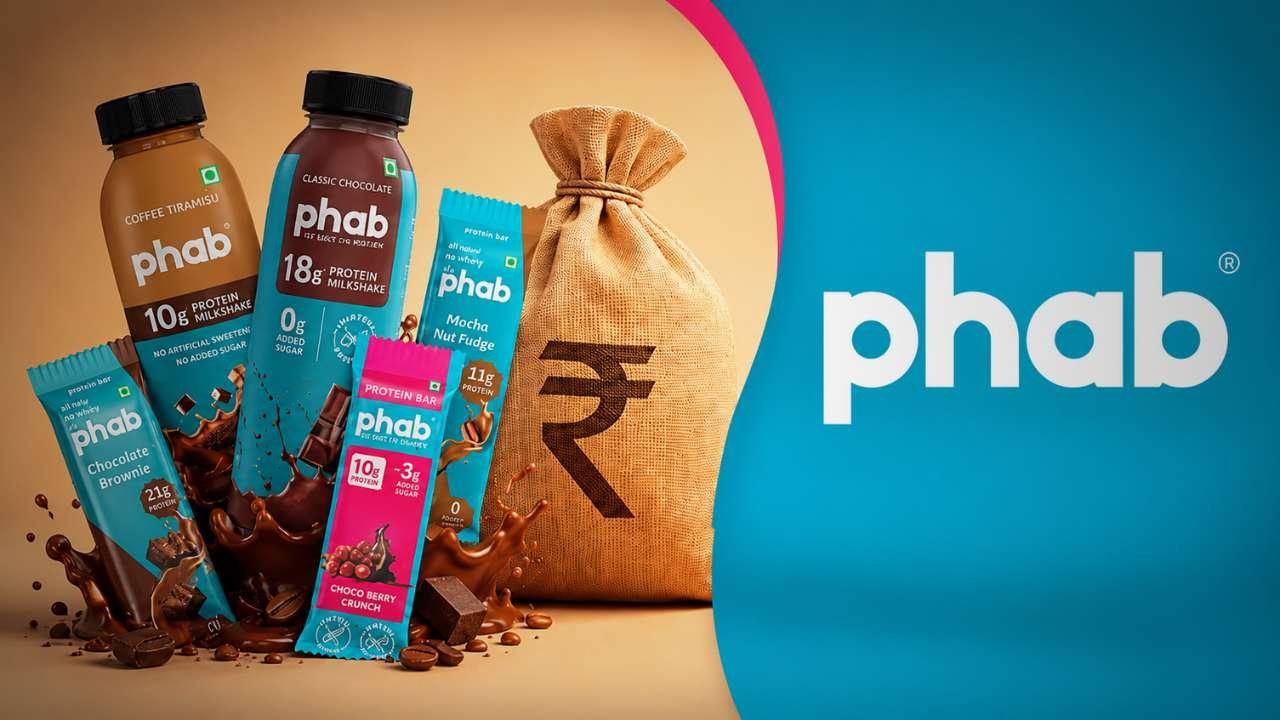
India’s growing health and protein food market is once again in the spotlight as nutrition brand Phab faces discussions around its product labels, consumer feedback, and financial performance. While the company has recently raised fresh funding to expand its business, independent product reviews and industry-wide checks have led to questions about transparency in the protein products segment.
Founded by entrepreneur and content creator Ranveer Allahbadia along with his co-founders, Phab has built its brand around healthier snacks and nutrition products. However, recent reports have brought both positive and negative attention to the company.
Lab Test Confirms Label Accuracy but Highlights Nutritional Issues
One of the biggest discussions started after an independent lab report by Unbox Health gave Phab’s Chocolate Protein Milkshake a “C” rating. Many people initially believed that the product had failed to meet its protein claim.
However, a closer look at the report shows that this was not the case. The milkshake actually received a perfect 10 out of 10 score for label accuracy. The confusion came from the way the protein content was measured. The lab tested the amount of protein per 100 grams of the drink instead of per bottle.
The test found 8.07 grams of protein per 100 grams. Since a full bottle weighs about 207.48 grams, the total protein comes to around 16.74 grams per bottle, which is close to the company’s claim of 18 grams.
The lower overall rating was mainly due to the product’s nutritional profile. The report gave it a score of 5.87 out of 10 because it contains several additives, including Carrageenan, Microcrystalline Cellulose, Carboxymethyl Cellulose, Sodium Citrate, Potassium Phosphates, and the artificial sweetener Sucralose.
At the same time, the milkshake performed very well in safety tests. It received a perfect non-toxicity score after no traces of heavy metals such as lead, arsenic, cadmium, or mercury were found. The tests also found no aflatoxins, which are harmful toxins produced by certain fungi.
Protein Bars Draw Consumer Complaints and Ingredient Questions
While the milkshake passed its label accuracy test, some of Phab’s protein bars have received criticism from reviewers and consumers.
An independent review of the brand’s 10g Protein Bar claimed that the listed protein, carbohydrates, fibre, and fat added up to only 26.32 grams of the total 40-gram bar. According to the reviewer, around 13.68 grams of the product’s weight was not clearly explained in the nutritional information.
The reviewer suggested that this missing weight could be linked to Maltitol, a sugar alcohol commonly used as a sweetener in low-sugar products. Critics argue that because the exact quantity of Maltitol is not disclosed, consumers may not get a complete picture of the product’s calorie content.
The issue gained more attention after users shared their experiences on social media and fitness forums. Some consumers reported digestive problems such as bloating, gas, stomach discomfort, and diarrhoea after consuming the bars.
Several users pointed out that the product packaging carries a warning stating that polyols may have a laxative effect. Nutrition experts have long noted that consuming large amounts of sugar alcohols like Maltitol can cause digestive issues in some people.
Although these complaints are based on personal experiences and may not affect every consumer, they have sparked a wider discussion about ingredient transparency and product labeling in the nutrition industry.
Funding Boost Comes Amid Financial Questions and Industry Scrutiny
Despite the controversy, Phab continues to attract investor interest. The company recently raised $4 million in a Pre-Series A funding round led by OTP Ventures and the Chona Family Office. Earlier, it had secured $2 million in a seed funding round, taking its total funding to $6 million.
The company plans to use the new funds to strengthen its brand, expand into new markets, hire more talent, and increase its presence across offline stores and quick-commerce platforms such as Zepto and Blinkit.
At the same time, questions have been raised about the company’s financial performance. Regulatory filings reportedly show that Phab’s operating revenue fell 12% to Rs 5 crore in FY24, while the company posted a net loss of Rs 6.8 crore.
However, the founders have shared different figures in media interviews, claiming that the company achieved a turnover of Rs 80 crore during FY24 and recorded a profit after tax of more than Rs 8 crore. These contrasting numbers have attracted attention from industry observers.
The discussion around Phab is happening at a time when India’s protein supplement market is facing greater regulatory scrutiny. Recent testing by food safety authorities reportedly found that many protein products in the market had inaccurate labeling and quality concerns.
In addition, a recent Delhi High Court ruling supported the right of influencers to review and criticise health products based on independent lab reports, as long as their comments are made in good faith and backed by facts.
As India’s health and nutrition market continues to grow, consumers are becoming more aware of product labels, ingredients, and health claims. For companies like Phab, maintaining transparency and building trust may be just as important as expanding their business.